Guide
Why Cobblestone Streets Punish Stiff Midsoles
By Rowan Hale, Footwear Editor · Published Oct 1, 2026 · Updated Oct 1, 2026
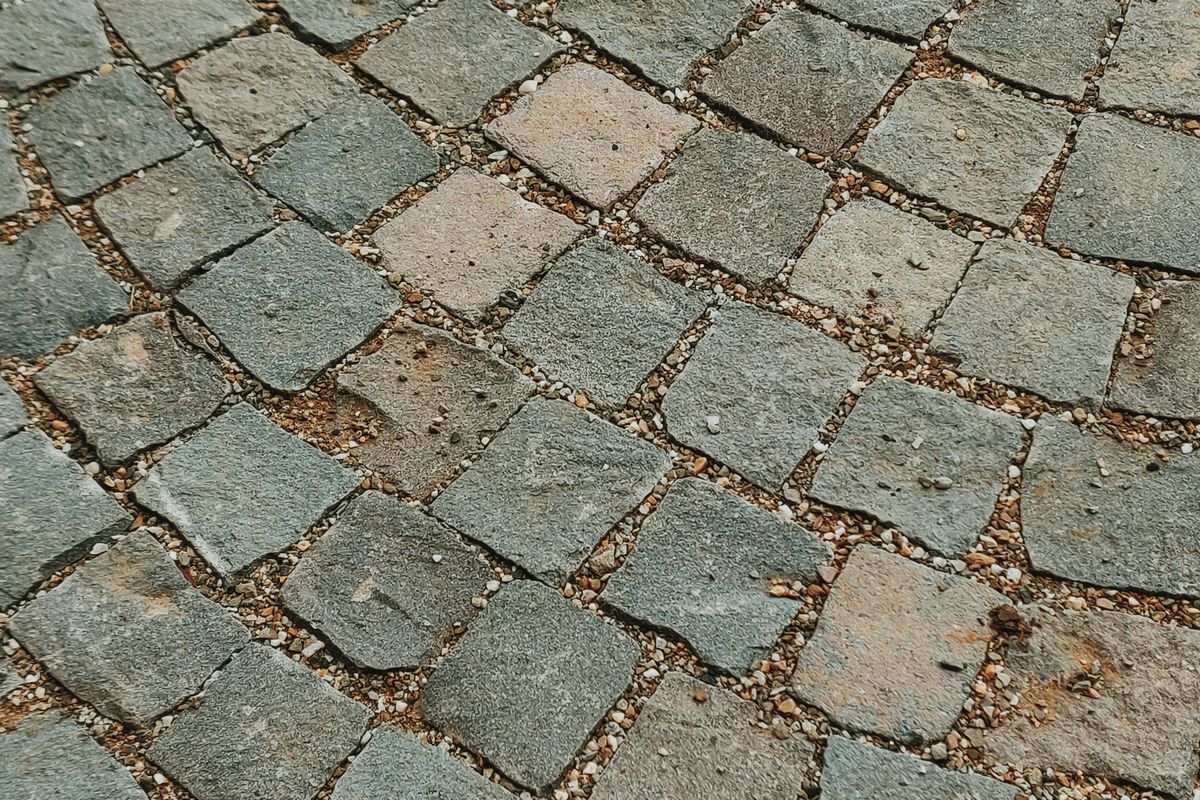
Cobblestones are the most demanding common surface your shoes meet, and almost nobody chooses shoes for them. The reason is mechanical, and once you see it, the shoe ads start reading differently.
The pressure problem
Flat pavement shares your weight across the whole sole of the shoe. A cobblestone can’t — each stone is a small dome, so your weight lands on whatever points of the outsole happen to touch the tops of the domes underneath you. The contact area shrinks, and pressure goes up in exactly the spots that get no help from the surface.
A stiff midsole makes this worse, not better. Whatever the sole refuses to flex around, your foot has to absorb: the arch, the metatarsal joints, the small muscles that stabilize each step. Over a few thousand steps, those structures are doing work that a flexible platform would have shared. The fatigue you feel after a day in a stiff-soled shoe on old streets isn’t general tiredness — it’s localized, and it maps to the joints that did the adapting.
What actually helps
Forefoot flex. The sole should bend where your foot bends, at the ball of the foot. This lets the platform distribute load across changing contact points instead of concentrating it.
Cushioning that rebounds. Soft-but-dead foam bottoms out on stone; firm-but-lively foam keeps returning energy across a full day. Stack height matters here — around 30 mm at the heel is the practical floor for very long days, per the pattern in owner feedback and the picks in our cobblestone walking guide.
Dense, shallow tread. Deep lugs grip soft dirt by digging in. On rounded stone they balance on their tips. Low-profile, closely spaced tread maximizes rubber-on-stone contact — the same logic that makes trail runners and hiking shoes behave differently on short trips.
A fit with room to swell. Feet expand over a full day. A snug morning fit becomes a pressure point by afternoon, and on stone there’s no soft surface to relieve it.
One more variable worth naming: torsional stiffness. Some shoes flex at the forefoot but resist twisting along their length. On cobblestones, where each step lands on an angle the eye can’t predict, that torsional give is what keeps small misalignments from traveling up the ankle. Shoes built with stability in mind often stiffen this axis deliberately — great on a road camber, counterproductive on dome-shaped stone. If you’re choosing between two similar models, the one that twists a little more easily by hand is usually the calmer ride on old streets.
The takeaway
Match the shoe to the surface’s actual failure mode. For cobblestones, that’s pressure concentration — which favors flexibility, resilient cushioning, and dense tread over stiffness, plushness, or aggressive lug depth. The shoe brands market hardest for “terrain” is often tuned for soft ground your city trip won’t have.
FAQ
- Is a stiffer shoe ever better for walking?
- On smooth, hard surfaces, some structure helps — a rocker shape and a stable heel can smooth the stride on long pavement days. The problem is specific to uneven terrain: whatever the sole can't flex around, your foot joints have to absorb instead.
- Does sole flexibility wear out over time?
- It goes the other way. Midsoles soften and lose rebound with mileage, while outsole rubber smooths down. A shoe that felt pleasantly flexible when new can become flat and unsupportive, which is why replacing worn shoes matters before long trips.
- How can I test flexibility in a store without walking miles?
- Bend the shoe by hand at the forefoot, roughly where your toes hinge. It should flex without forcing. Then twist gently along its length — a little torsional give is fine for city use; a plank that resists both will make your feet do all the adapting on uneven stone.
On the Ground
Four surfaces, read separately
Airport day
Terminal floors, security lines, overnight feet.
Beach town
Hot pavers, algae-slick steps, sand in everything.
City walking
Old stone that never flexes underfoot.
Trail day
Day-trip dirt that turns to mud by noon.