Guide
On the Ground: What Beach Town Pavement Does to Shoes by September
By Rowan Hale, Footwear Editor · Published Oct 1, 2026 · Updated Oct 1, 2026
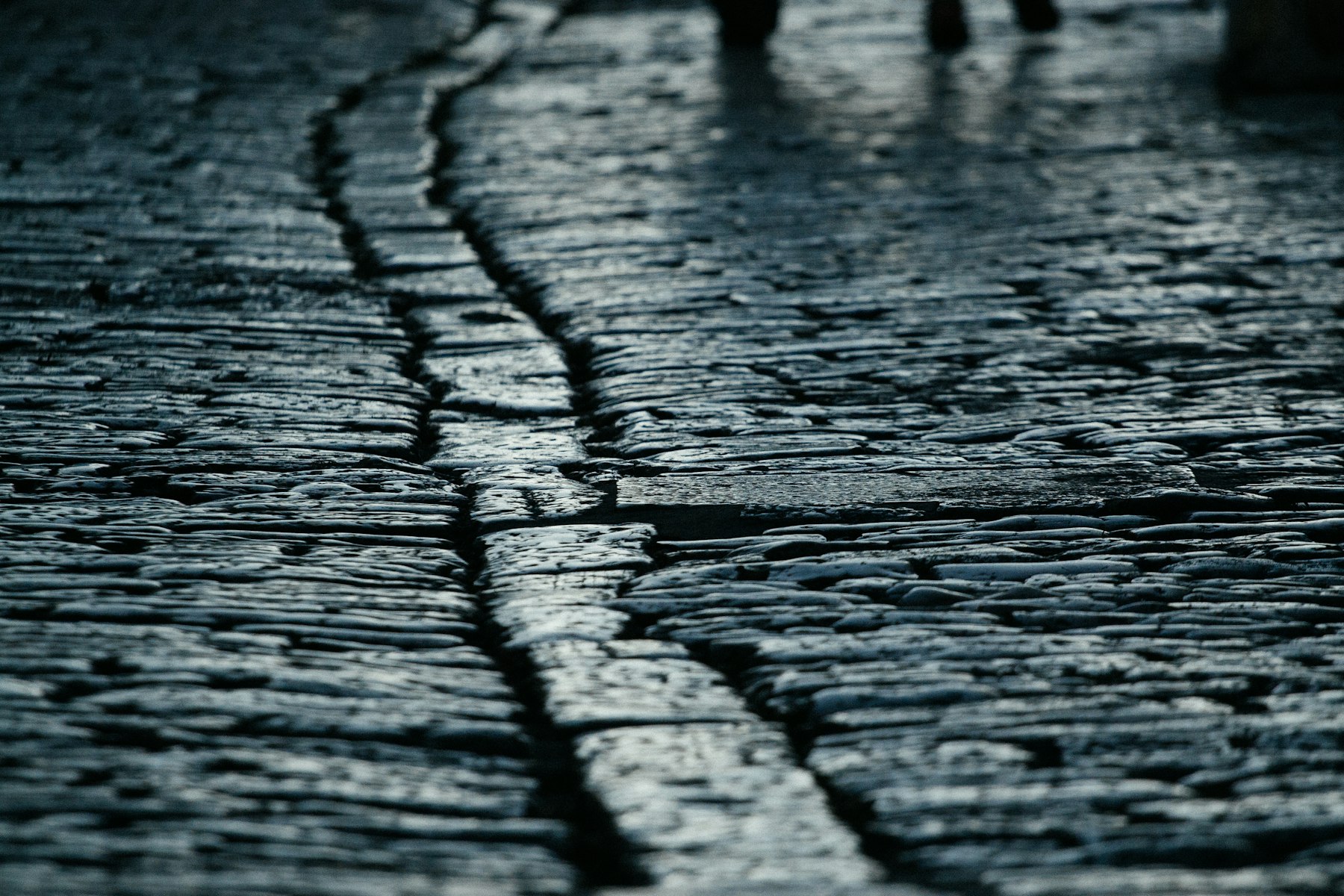
Beach towns are gentle places to visit and hostile places to leave a pair of shoes. The damage is not dramatic — no alpine scree, no mud — which is exactly why it adds up. A season of beach-town walking runs the same surfaces thousands of times: the pale promenade pavers, the stone steps down to the water, the sand that gets everywhere. By September the shoes that arrived in June tell the whole story, and the three surfaces each leave a different fingerprint.
Surface one: pale pavers that cook
The signature beach-town surface is the light-colored paver or sand-brick used for promenades and old-town lanes. Pale stone keeps the town looking cool in photographs and does the opposite underfoot. Light surfaces reflect less of the sun’s energy than dark asphalt, but beach-town pavers sit in direct sun all day with warm air above and little shade, and by mid-afternoon they hold enough heat that the pavement is warm through a thin sole.
Heat is a quiet material problem. EVA, the foam in almost every midsole at this price point, softens measurably as it warms — the same property that makes a foam footbed mold comfortably underfoot on a hot deck also makes it compress faster and rebound slower. A shoe that spends August afternoons on hot stone compresses its cushioning at a pace no amount of step count would predict. Dark rubber outsoles take the heat too, and a soft, grippy compound left parked on sun-heated stone wears faster than it would on a cool city sidewalk. Then there is the human factor: on burning pavers, people change how they walk, hopping onto shaded strips, cutting through sand, heel-striking carefully. Shoes notice gaits like that.
The shoe that survives this surface is the one that spends its evenings off the pavement. Any shoe left outside, on a balcony rail, or in a hot car is aging on a schedule the spec sheet never promised.
Surface two: wet stone with a green skin
The steps from the town down to the water tell a different story. Stone stairs that dry by late morning get walked wet at dawn and again after the afternoon swim, and in the damp shade they grow a thin film of algae and residue that locals treat with respect and visitors discover in real time. Wet, smooth stone with a biological film is about the lowest-friction surface a travel shoe will meet outside an ice rink.
Outsole rubber handles it only as long as the tread has edges. Grip on wet smooth stone comes from the sharp edges of the tread lugs biting the surface and from a compound that stays compliant when cool and wet. Both fade with wear: a season of hot pavers rounds the lug edges first, and the same steps that were secure in June feel uncertain by September. This is the surface where the cheap, smooth-soled foam sandal fails outright, and where a worn-out lug pattern on an otherwise fine sneaker turns quietly dangerous.
The fitting lesson is not about brand or compound — it is about tread shape at the moment of purchase. Deep, well-separated lugs with visible edges hold their margin longer. A nearly flat sole with a fine texture pattern is already at the end of its grip life in this town.
Surface three: the sand that gets in
Fine dry sand is the third surface, and the least appreciated. It does not stay on the beach. It rides in on feet, on towel corners, in the tread, and it does one thing with great patience: it works into every opening a shoe has. Woven mesh uppers, stitch lines, the junction where the upper meets the midsole, the tongue gusset — fine sand migrates into all of them and then sits there abrading fibers every step you take. By September, the stitching on a beach-town shoe is usually the first structural thing to go, and the sand is why.
Add salt and the attack goes chemical as well as mechanical. Sea water carries dissolved salt into every layer it reaches, and when the shoe dries, the salt stays behind and crystallizes. Footwear care guides are unanimous on this point: salt crystals work into seams and foam, and left alone they draw moisture back in, stiffen uppers, and speed the breakdown of adhesives. The mechanics are ordinary materials behavior — crystals expanding in constrained spaces, salts attracting water, adhesive bonds cycling through wet and dry — and none of it requires a laboratory to notice. It requires one summer.
The wet-dry-wet cycle
The single most underrated factor in a beach town is not any one surface. It is the rhythm. A beach day soaks the shoe — surf, wet steps, a hose rinse at the beach bar — then dries it in the sun, then soaks it again at dusk. Foam midsoles compress differently when damp and take hours to rebound. Adhesive bonds that hold fine when dry weaken with every wet-dry cycle. Leather draws out its oils and picks up salt lines. Even the sockliner salt-hardens where the foot’s sweat and the seawater meet.
That cycle is why a shoe can look intact and feel dead: the foam has been asked to rebound from damp compression every day for a season, and adhesives between midsole and upper have been cycling with it. Shoes that fail in beach towns tend to fail at the bond line, not the tread.
It is also why rotation matters more here than anywhere else a traveler is likely to go. Two pairs alternating days give each shoe a full dry-out between exposures, which resets the foam and starves the salt cycle before it accumulates. A single pair worn day after day never gets that reset — it enters each morning still carrying the previous day’s damp. If the trip is long enough to justify a second pair at all, a beach town is the destination that justifies it.
What this pavement selects for
Standing back from the three surfaces, a pattern emerges that has less to do with any single shoe and more to do with what the town quietly demands. The hot pavers select for foam that rebounds — firmer midsoles age slower here than plush ones, whatever the step count says. The wet steps select for tread with edges, and for a secure enough closure that nothing slides when the foot does. The salty sand selects for materials that rinse and dry without complaint: synthetics, webbing, treated leather, and uppers without absorbent linings that stay damp into a second day.
The common thread is drainage of every kind. Water leaves, salt leaves, sand leaves, and the shoe resets. The shoes that die in these towns are usually the ones that trap one of the four — a closed foam footbed that holds water, a lining that holds sand, a sole that holds heat, a design that holds salt against the stitching until October.
The two-minute evening habit
The countermeasure is unglamorous and it works. That evening, at the tap: a fresh-water rinse of the whole shoe, not a wipe — you are dissolving salt out, not moving it around. Pull the sockliners and let them dry separately. Knock or brush the sand out of the mesh before it dries hard. Then air-dry out of direct sun, because the same ultraviolet light that tan lines your shoulders degrades foam and fabric on a hot rail. Never on a radiator, never in a hot car. Two minutes of water and patience, repeated, is the difference between a shoe that dies in August and one that reaches October still holding a shape.
The one move to make at your next fitting
Wet your feet at the shop’s water fountain — properly wet, not damp — put the candidate shoe on, and walk to the store’s tile floor. Feel for heel slip first, then forefoot slide. Wet feet mimic the fourth hour of a beach day better than any dry fitting will, and a shoe that holds a wet foot without creeping is the only kind worth carrying into a town where every path ends at the water.
FAQ
- Does rinsing shoes in fresh water after the beach really matter?
- Yes, and it is the one piece of advice every footwear care guide agrees on. Salt left behind crystallizes as the water evaporates, working into seams, stitching, and foam cells. A plain fresh-water rinse removes most of it before it can do that, and costs two minutes at the outside tap.
- Can a beach town shoe be saved once the midsole feels flat?
- Compression that comes from age and load is permanent, but compression that comes from a wet, salt-loaded day is often temporary. Dry the shoes slowly away from direct sun for a couple of days and press the midsole. If it rebounds, the shoe still has life; if the dent stays, the foam is done.
- Why do outsoles that gripped well in June slip on the same steps in September?
- A season of hot pavement, wet stone, and grit rounds the edges of the tread lugs and smooths the rubber surface. Grip lives in the sharp edges, so the loss is gradual and easy to miss until a slick morning reminds you. When the lugs look flat from the side, the shoe has told you.
On the Ground
Four surfaces, read separately
Airport day
Terminal floors, security lines, overnight feet.
Beach town
Hot pavers, algae-slick steps, sand in everything.
City walking
Old stone that never flexes underfoot.
Trail day
Day-trip dirt that turns to mud by noon.