Picks
What Makes a Good Day-Hike Shoe? Weight, Torsion and Grip
By Rowan Hale, Footwear Editor · Published Oct 1, 2026 · Updated Oct 1, 2026
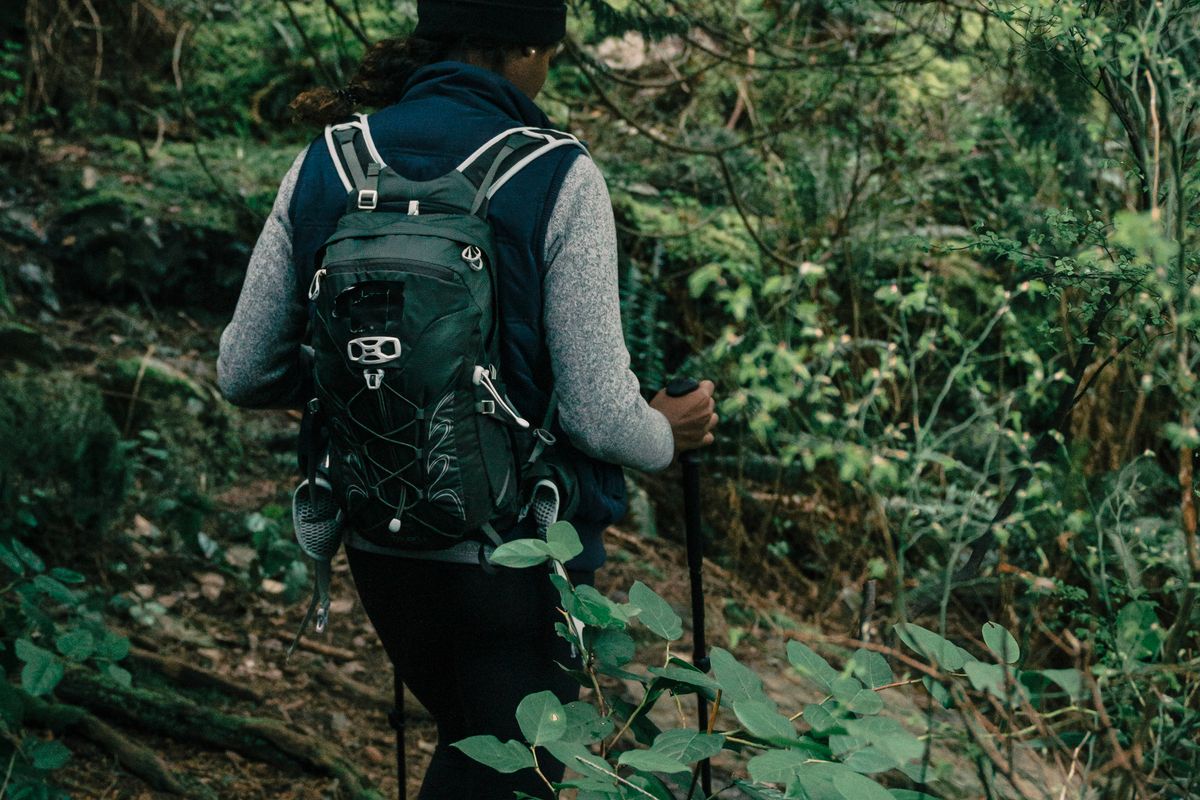
A day trip punishes the wrong shoe slowly. The first hour feels fine on anything; the difference shows up around hour four, when a platform that was merely adequate starts asking your arches to do structural work the shoe should be handling. For single-day routes with a day pack, four properties decide whether a shoe holds up.
What a day-hike shoe actually needs
Weight near the 400 g mark. Published specs put the current sweet spot for low-cut day hikers between roughly 310 and 460 g per shoe. Lighter reduces the lift-per-step cost that compounds over thousands of strides; heavier usually buys leather, membranes, or structure you may not need on a route that ends before dark.
Torsional rigidity. Grab a shoe by heel and toe and twist. A day-hike shoe should resist that twist, because angled rocks and exposed roots apply exactly that force to your forefoot. Retail listings that mention an internal chassis or shank are describing this property — it is the feature that keeps your midfoot from paying for loose ground.
Grip on loose material. Gravel, scree, and dry dirt need a rubber compound and lug pattern that bite small, shifting particles rather than slick slabs. Owner reviews on mixed-terrain routes consistently reward all-terrain compounds over road-style outsoles here.
Midfoot support under load. A day pack changes your gait: more upright torso, harder heel strikes, and more time under tension through the arch. A contoured footbed and an arch shank matter more on a loaded day trip than on an evening stroll, which is why the picks below all specify some midfoot structure.
The picks
Per our comparison method, these come from published specs, retail listings, and repeating patterns in verified owner feedback — not from a test lab.
Salomon X Ultra 4 GTX — the all-rounder for mixed terrain.
The published spec lists 390 g per shoe, an 11 mm drop, and Salomon’s Advanced Chassis between midsole and outsole — the torsional platform this scenario pays for. The All Terrain Contagrip outsole is built for wet and loose surfaces alike, and the GORE-TEX membrane covers shoulder-season mornings. Owner reviews commonly note confident descents, which is where chassis stability shows.
Altra Lone Peak 9 — the lightest option.
At 316 g per shoe with a 25 mm stack and zero drop, it trades structure for weight and ground feel. The MaxTrac outsole with multi-directional lugs grips loose ground well according to retail listings, and the roomy Original FootShape fit tolerates afternoon swelling. Best for hikers who already get along with flat, flexible platforms and mostly walk established trails.
Merrell Moab 3 — the support-first classic.
The heaviest of the three at a published 460 g per shoe, but it backs the weight up with a molded nylon arch shank, the Vibram TC5+ outsole with 5 mm lugs, and a heel Air Cushion. Out-of-the-box comfort with almost no break-in is the most repeated point in owner reviews. Choose it when your day pack is heavy or your route is long.
How to choose between them
Match the shoe to the ground, not the trailhead photo. Rock-strewn or steep routes earn the X Ultra 4’s chassis. Smooth, well-traveled paths make the Lone Peak 9’s low weight the better deal. Loaded packs, wide feet, or all-day itineraries point to the Moab 3 — accept the grams, keep the support. For help sizing and matching a shoe to an itinerary, see how to choose travel shoes.
The picks
Some links below are affiliate links — we may earn a commission at no extra cost to you.
Salomon X Ultra 4 GTX
Best overallA published 390 g per shoe with an 11 mm drop and an internal Advanced Chassis that provides the torsional stability loose ground demands. All Terrain Contagrip rubber and a GORE-TEX membrane cover wet rock and shoulder-season weather.
Altra Lone Peak 9
Lightest pick $145316 g per shoe, 25 mm stack, zero drop, and a MaxTrac outsole with multi-directional lugs. The roomy Original FootShape fit suits wide or swelling feet on established trails, at the cost of less torsional structure.
Merrell Moab 3
Best supportA published 460 g per shoe backs a molded nylon arch shank, heel Air Cushion, and a Vibram TC5+ outsole with 5 mm lugs. Owner reviews consistently cite out-of-the-box comfort with minimal break-in, ideal for loaded day packs.
At a glance
| Pick | Weight per shoe | Drop | Standout feature | Best for |
|---|---|---|---|---|
| Salomon X Ultra 4 GTX | 390 g | 11 mm | Advanced Chassis + Contagrip | Mixed and loose terrain |
| Altra Lone Peak 9 | 316 g | 0 mm | Wide toe box, MaxTrac grip | Established trails, light packs |
| Merrell Moab 3 | 460 g | 11.5 mm | Arch shank + Vibram TC5+ | Heavy day packs, all-day routes |
FAQ
- How light should a day-hiking shoe be?
- Most day-hike models land between 300 and 460 g per shoe in men's sizing. Below roughly 300 g you usually give up underfoot protection; above 450 g you start paying for each gram over a full day of stepping. Around 400 g is the practical middle for mixed terrain.
- What does torsional rigidity do on a hike?
- It limits how much the shoe twists when the forefoot lands on an angled rock or root. A platform that resists twisting keeps your arch from absorbing that rotation, which matters more as a day pack adds load through the afternoon.
- Do I need waterproofing for a day trip?
- Not always. Membranes help in wet grass, mud, and shoulder-season rain, but they hold heat in summer and stay wet inside once water gets over the collar. For dry-season day hikes, a breathable non-waterproof upper is often the better trade.
- Are trail runners a valid alternative?
- For well-maintained trails and lighter loads, yes — cushioned trail runners cut weight and add shock absorption. They give up torsional structure and underfoot protection, which is exactly what loose, rocky ground asks for. We compare the two approaches in our trail runners guide.
On the Ground
Four surfaces, read separately
Airport day
Terminal floors, security lines, overnight feet.
Beach town
Hot pavers, algae-slick steps, sand in everything.
City walking
Old stone that never flexes underfoot.
Trail day
Day-trip dirt that turns to mud by noon.